Astaxanthin: Promising antioxidant biocompound for cardiovascular health
Cập nhật lúc 09:42, Thứ năm, 29/01/2026 (GMT+7)
ASX is a powerful xanthophyll carotenoid known for its complex molecular structure, which is essential to its biological functions. Its core consists of a conjugated polyene chain with an alternating pattern of double and single bonds.
ASX is a powerful xanthophyll carotenoid known for its complex molecular structure, which is essential to its biological functions. Its core consists of a conjugated polyene chain with an alternating pattern of double and single bonds. This specific configuration allows ASX to absorb light effectively across various wavelengths, playing a vital role in photosynthesis in some algae and offering protective mechanisms in multiple organisms Furthermore, ASX contains key functional groups, specifically hydroxyl (-OH) and keto (=O) groups, positioned strategically along its molecular backbone. These groups significantly boost their antioxidant properties. Acting as strong electron donors, ASX can effectively neutralize free radicals, which are unstable molecules that can cause significant oxidative damage within cells. Its antioxidant strength surpasses that of well-known carotenoids like β-carotene and vitamin E (α-tocopherol) due to the unique arrangement and synergy of its functional groups. Additionally, ASX can undergo esterification to enhance its solubility in cells and stability against oxidation. The hydroxyl groups on its rings can bond with fatty acids such as palmitic, oleic, stearic, or linoleic acid, forming monoesters or diesters. It can also remain free, where the hydroxyl groups are unbound and capable of interacting with proteins or lipoproteins.
There are three configurational isomers of ASX: two enantiomers (3R,3′R and 3S,3′S) and one meso form (3R,3′S). The alga Haematococcus primarily produces the 3S,3′S isomer found in wild Atlantic salmon, while Antarctic krill mainly produces the 3R,3′R isomer
    |
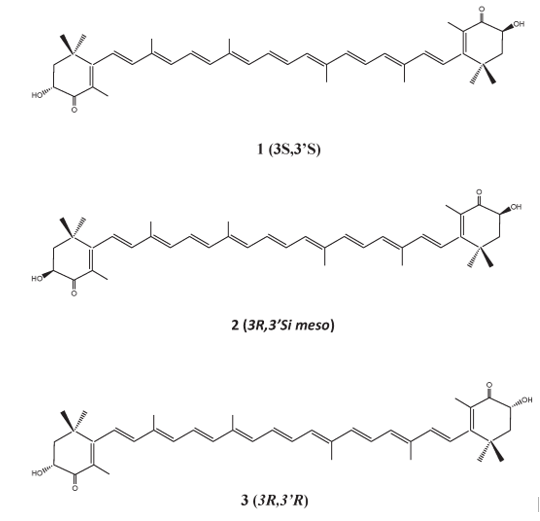 |
| Figure 1. Isomers of Astaxanthin |
ASX, a powerful carotenoid mainly found in the microalga Haematococcus pluvialis, has gained notable attention for its health benefits, especially in cardiovascular health. Extensive clinical research highlights its strong antioxidant and anti-inflammatory properties, which are essential in fighting various chronic diseases. ASX acts as an antioxidant that effectively neutralizes free radicals. These highly reactive molecules can damage cells, speed up aging, and contribute to many health conditions, including heart disease. ASX supports cellular health and function by reducing oxidative stress, which is vital for overall well-being. Besides its antioxidant role, ASX plays a key part in modulating inflammatory pathways in the body. Chronic inflammation is a major factor in many CVDs, and ASX’s ability to lower inflammatory markers can significantly reduce the risk of conditions like atherosclerosis. This modulation helps prevent heart problems and enhances recovery after physical activity Additionally, ASX has been shown to improve physical performance, making it a favored supplement among athletes. It enhances blood flow and reduces muscle fatigue, supporting endurance and recovery during intense exercise. In summary, ASX possesses unique qualities that make it a valuable aid for heart health. It offers strong antioxidant protection, reduces inflammation, boosts physical performance, and supports cellular health, all contributing to healthy aging anoverall wellness.
|
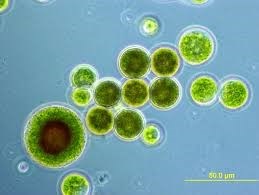 |
| Fig 2. Microalga Haematococcus pluvialis |
Source: https://jksus.org/astaxanthin-a-promising-nutraceutical-for-cardiovascular-health/ (abridged translation)