Formalin, an aqueous solution containing formaldehyde, is a widely used industrial chemical with legitimate applications in sectors such as plastics manufacturing, textile processing, and biological specimen preservation. However, the illegal use of formalin as a food preservative continues to be reported sporadically in several countries, including Viet Nam. Both the World Health Organization (WHO) and the International Agency for Research on Cancer (IARC) have classified formaldehyde as a Group 1 carcinogen, indicating sufficient evidence of carcinogenicity in humans. This article provides an overview of the toxicity of formalin, its mechanisms of harm, current issues related to its presence in food, and practical recommendations for consumer protection.
What is formalin and why does it appear in food?
Formalin is a solution containing approximately 37–40% formaldehyde, a highly reactive compound characterized by a strong, pungent odor and potent antimicrobial properties. In industrial settings, formaldehyde is legally and extensively used. However, due to its ability to delay spoilage and impart a firmer, more elastic texture, formalin has been misused by some food processors and vendors as an illicit preservative.
In Viet Nam, regulatory authorities have repeatedly detected formalin-treated seafood such as squid, shrimp, and fish prior to distribution. Certain samples of fresh rice noodles and pho noodles were also found to contain formaldehyde, particularly before 2015. Although regulatory oversight has been strengthened and violations have declined, isolated cases continue to emerge in recent years, mainly involving small-scale operations and informal segments of the fresh food supply chain.
Globally, similar concerns have been reported in countries such as Bangladesh, India, and China, where formaldehyde has been used to extend the shelf life of fish, seafood, and vegetables during long-distance transportation.
Mechanism of toxicity in the human body
Formaldehyde is a highly reactive chemical that can affect many biological structures in the human body.
First, direct contact with the mucosa of the oral cavity, esophagus, or stomach can cause protein coagulation, leading to severe irritation, burning sensations, or acute inflammation. This mechanism underlies the acute toxicity observed after consumption of foods containing high concentrations of formalin.
Second, formaldehyde induces oxidative stress by increasing the generation of reactive oxygen species (ROS). These reactive molecules damage cell membranes, enzymes, and mitochondria, resulting in tissue degeneration and cellular dysfunction following prolonged exposure (Salthammer et al., 2010).
Third, formaldehyde can form cross-links between proteins and DNA, causing genetic mutations and interfering with DNA repair mechanisms. Based on strong epidemiological evidence of nasopharyngeal cancer in humans and extensive experimental data demonstrating genotoxicity, IARC has classified formaldehyde as a Group 1 carcinogen (IARC, 2006).
Acute and chronic health effects
Acute exposure to formalin-contaminated food may cause abdominal pain, vomiting, diarrhea, and throat irritation. At higher doses, formaldehyde can disrupt respiratory function, induce metabolic acidosis, and affect the central nervous system.
Chronic, repeated exposure—even at low levels—can result in cumulative damage to gastrointestinal tissues, suppression of immune function, and injury to the liver and kidneys, which play central roles in chemical metabolism and detoxification. Several studies in Asia have reported an increased risk of precancerous lesions in the gastrointestinal tract among populations with frequent consumption of formalin-contaminated foods (Kim et al., 2011).
Current situation in Viet Nam and internationally
In Viet Nam, intensive food safety inspection campaigns conducted between 2007 and 2015 frequently identified formalin in noodles and fresh seafood. As a result of stronger regulatory enforcement, the prevalence of violations declined significantly after 2016. Nevertheless, recent reports from several localities indicate that sporadic misuse of formalin persists, particularly in seafood handling at landing sites and intermediate distribution points.
In 2023, multiple samples of silver pomfret tested positive for formalin in Bo Trach District; rice noodles containing formaldehyde were detected in Hai Duong, and in 2024, contaminated vermicelli samples were reported in Dong Nai Province. These incidents underscore that formalin remains a latent risk within the fresh food supply chain.
    |
 |
| Figure 1. Detection of formaldehyde in some food products in Vietnam. |
Internationally, South Asian countries continue to face challenges related to the illegal use of formalin in fish preservation during long-distance transport, notably in Bangladesh and India. In Thailand, formaldehyde contamination was identified in food served at ten restaurants following the seizure of 25 tonnes of meat, highlighting the transboundary nature of the problem.
|
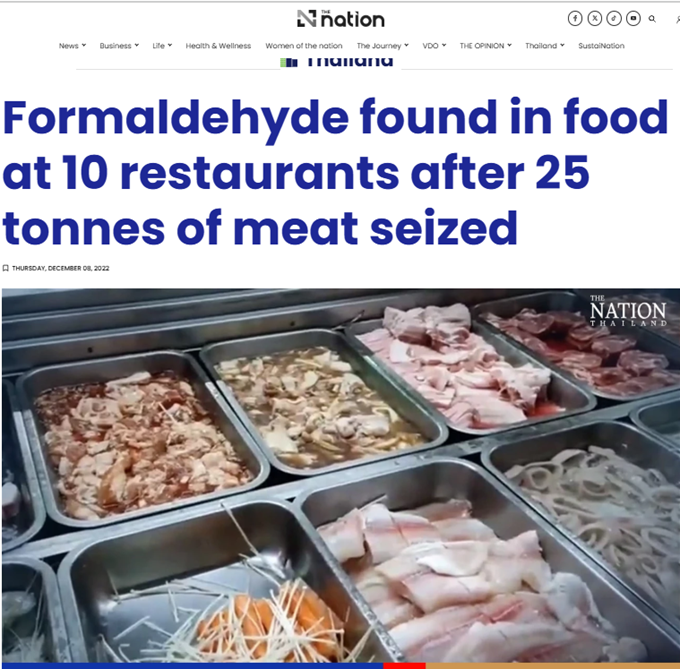 |
| Figure 2. Formaldehyde detected in food at 10 restaurants in Thailand after 25 tons of meat were seized. |
Identifying and preventing risks
Consumers cannot reliably detect formalin through sensory evaluation alone. However, certain warning signs—such as unusually firm or elastic seafood that remains non-slippery after extended storage, or fresh noodles that spoil more slowly than expected—may warrant increased caution. While not definitive, these characteristics should prompt consumers to be vigilant.
The most effective preventive measures include purchasing food from reputable suppliers, prioritizing products with clear traceability, and ensuring proper cold storage. For producers and vendors, strict compliance with permitted additive lists and routine chemical testing is mandatory.
Recommendations from international organizations
WHO and FAO have consistently emphasized that formaldehyde has no safe threshold for use in food due to its carcinogenic potential and cumulative health risks. Consequently, most countries enforce a complete ban on the use of formalin in food processing.
International recommendations include strengthening market surveillance through rapid screening tests, raising public awareness, promoting food traceability systems, and intensifying oversight of small-scale producers, who are often at higher risk of non-compliance.
In summary, formalin is a hazardous chemical capable of causing severe irritation, cellular damage, and an increased risk of cancer following prolonged exposure. Although violations have declined substantially in Viet Nam, the risk has not been entirely eliminated, particularly within fresh food supply chains. Protecting public health requires sustained coordination among regulatory authorities, food producers, and consumers to ensure that formalin-contaminated foods are completely removed from the market.
References
International Agency for Research on Cancer. (2006). Formaldehyde, 2-butoxyethanol and 1-tert-butoxypropan-2-ol (IARC Monographs on the Evaluation of Carcinogenic Risks to Humans, Vol. 88). Lyon, France: IARC.
Kim, K.-H., Jahan, S. A., & Lee, J. T. (2011). Exposure to formaldehyde and its potential human health hazards. Journal of Environmental Science and Health, Part C, 29(3), 277–299. https://doi.org/10.1080/10590501.2011.601848
Salthammer, T., Mentese, S., & Marutzky, R. (2010). Formaldehyde in the indoor environment. Chemical Reviews, 110(4), 2536–2572.
World Health Organization. (2002). Formaldehyde in drinking-water: Background document for development of WHO guidelines for drinking-water quality. WHO Press.
Compiled by Hoang Viet Giang
Department of Food Safety and Quality Management